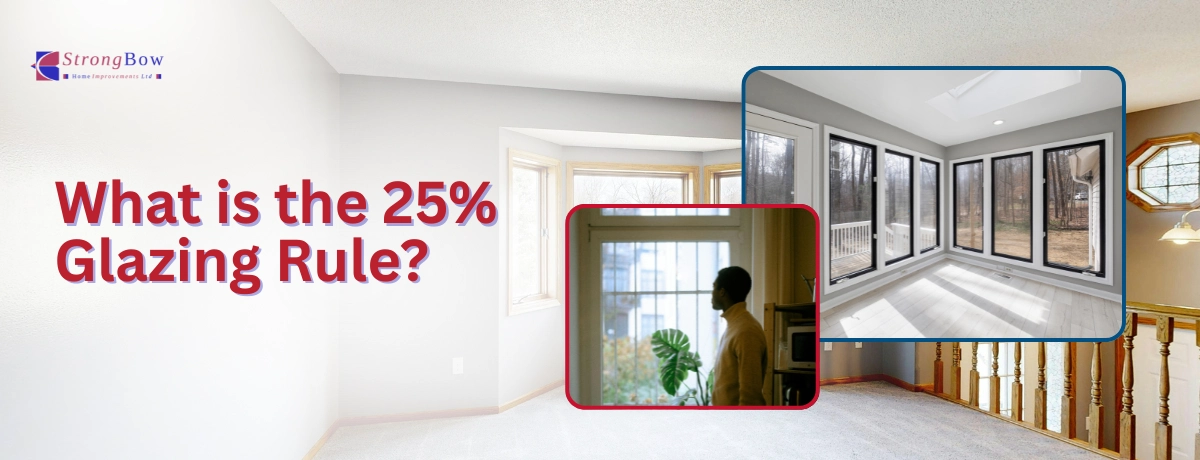
If you’re planning to replace your windows or add new glazing to your home, you may come across something called the 25% glazing rule. It’s a UK Building Regulations guideline that often causes confusion, especially for homeowners upgrading older properties.
Let’s break it down properly so you know what it means, when it applies, and how it affects your window replacement project.
What Is the 25% Glazing Rule?
The 25% glazing rule is part of UK Building Regulations (Approved Document L), which focuses on energy efficiency.
In simple terms:
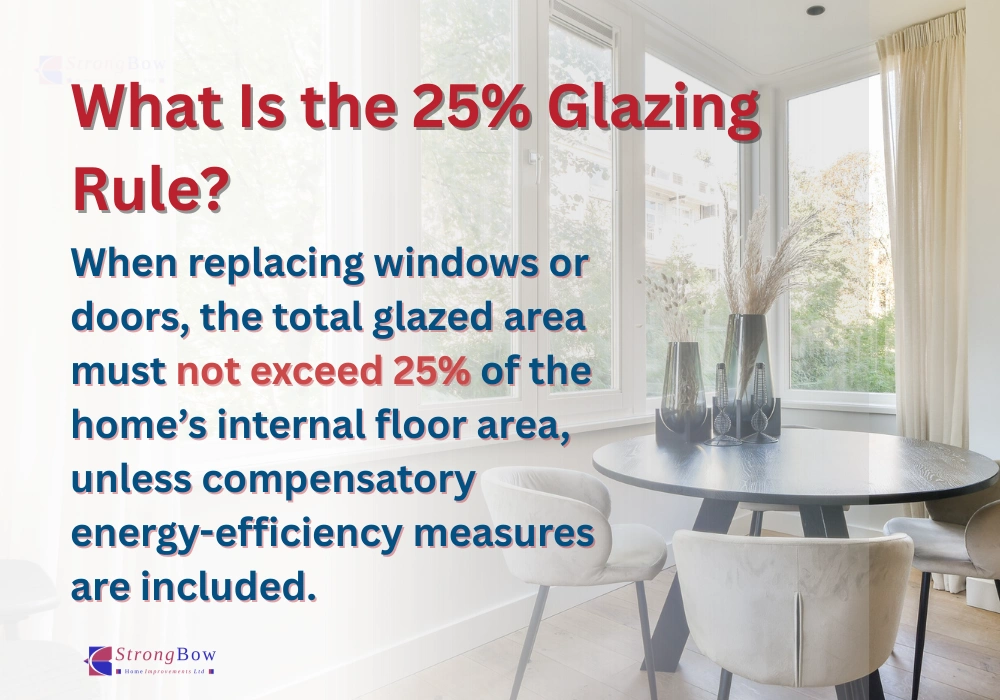
When replacing windows or doors, the total glazed area must not exceed 25% of the home’s internal floor area, unless compensatory energy-efficiency measures are included.
This rule is designed to prevent excessive heat loss through glass, especially in older homes that were not built with modern insulation standards.
Why Does the Rule Exist?
Glass allows natural light in, but it also lets heat escape more easily than solid walls. The rule exists to:
- Reduce unnecessary heat loss
- Improve overall energy efficiency
- Keep heating bills under control
- Ensure homes meet modern thermal standards
It’s not there to stop you from having larger windows, but to make sure your home stays warm and efficient.
How the 25% Is Calculated
The calculation is straightforward:
- Measure the total internal floor area of the property (in square metres)
- Calculate 25% of that figure
- The total glazed area of replacement windows and doors should stay within that limit
Example:
- Internal floor area: 100 m²
- Maximum allowed glazing: 25 m²
This includes:
Does the Rule Apply to Every Property?
The 25% glazing rule does not apply in the same way to every home, and this is where a lot of confusion comes from. While it forms part of UK Building Regulations, its application depends on the type of work being carried out and the nature of the property itself.
In most cases, the rule is relevant when windows or doors are being replaced and the work falls under Building Regulations control. Its purpose is to ensure that changes do not reduce the overall energy efficiency of the home. However, it is not designed to penalise homeowners who are simply upgrading old, inefficient glazing.
For like-for-like replacements, where the new windows or doors are the same size and position as the originals, the rule rarely causes any issues. In fact, modern glazing almost always improves thermal performance compared to older units, which means compliance is typically achieved automatically.
New-build homes are treated differently. These properties follow a whole-house energy assessment rather than the 25% guideline alone, so glazing is assessed as part of a broader calculation that includes insulation, heating systems, and overall design.
Certain structures, such as conservatories and porches, are often exempt provided they meet specific criteria, including separation from the main house with external-quality doors and independent heating controls.
Finally, even where glazing exceeds the 25% threshold, it does not automatically mean a project will fail. Building Regulations allow flexibility through compensatory measures, meaning improved glazing performance or insulation elsewhere can still bring the property into compliance.
How to Pass the 25% Rule Without Sacrificing Your View?
Larger windows, bi-fold doors, and open glass elevations are some of the most requested features in modern UK homes. But if you are worried that “too much glass” means falling foul of the 25% glazing rule, the good news is this: you do not have to give up your view to stay compliant.
The rule focuses on energy performance, not aesthetics. That means there are practical ways to enjoy expansive glazing while still meeting Building Regulations.
1. Use higher-performance glazing, not smaller windows
Modern double and triple glazing performs far better than older units. Low-U-value glass, warm edge spacers, and argon-filled units significantly reduce heat loss. In many cases, upgrading the glass specification alone is enough to offset a larger glazed area.
2. Replace like for like wherever possible
If you are replacing existing large windows or doors in the same openings, this is usually acceptable, especially when the new units are more energy efficient than what was there before. You are improving the home’s thermal performance, not weakening it.
3. Balance glazing with insulation improvements
If glazing does push beyond the 25% threshold, compliance can still be achieved by improving insulation elsewhere. Better roof insulation, upgraded wall insulation, or higher-performance frames all help balance the overall energy calculation.
4. Choose frames that work harder thermally
Frames matter just as much as glass. Modern uPVC and composite systems are designed with multi-chamber profiles that reduce heat transfer, helping larger glazed areas remain compliant.
5. Let professionals handle the calculations
The biggest mistakes happen when homeowners guess. A professional installer will assess your floor area, glazing size, and thermal performance together, ensuring compliance without unnecessary compromises.
The 25% glazing rule is not a design limit. With the right glass, frames, and specification, you can enjoy bright rooms, wide views, and modern glazing features while still meeting Building Regulations comfortably.
How Strongbow Home Improvements Ltd Helps Homeowners Stay Compliant

As experienced manufacturers and installers, Strongbow Home Improvements Ltd ensure that:
- All replacement windows meet current UK Building Regulations
- Energy-efficient glazing is specified correctly
- Compliance paperwork is handled professionally
- Homeowners avoid costly mistakes or delays
With in-house glazing expertise and tailored designs, compliance is built into the process, not treated as an afterthought.
Let Strongbow Home Improvements Ltd assess your property properly and design energy-efficient windows that keep you compliant without compromising light or views.