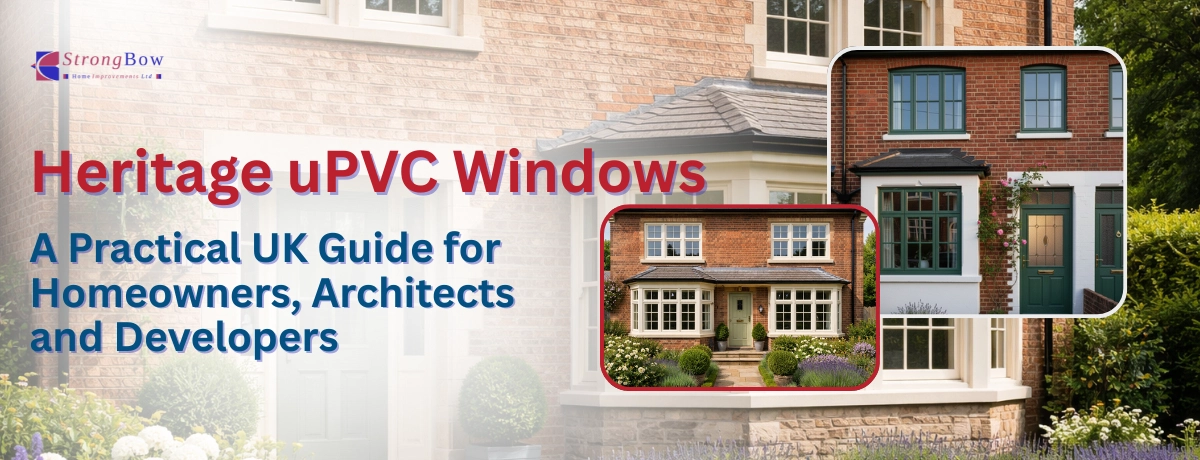
This guide is for UK homeowners, architects and developers who are planning window or door upgrades in 2026 and beyond. Over the past few years, heritage uPVC has shifted from being seen as a budget compromise to a genuine high-performance standard. That change has been driven by tighter Building Regulations, rising energy costs, and a wider acceptance of modern materials in traditional architecture.
In short, you no longer have to choose between how your home looks and how it performs. In 2026, the right heritage uPVC system can deliver both.
This guide explains what has changed, what councils now expect, and how to make informed decisions that stand up to planning scrutiny, future regulations and real-world British weather.
Why heritage uPVC windows is now the default choice in 2026
Ten years ago, homeowners replacing timber windows often felt boxed into a corner. Timber looked right but needed constant upkeep. Early uPVC performed well but looked wrong, especially on Victorian and Edwardian homes.
By 2026, that gap has largely closed.
Modern heritage uPVC systems now offer:
- Thermal performance that meets and often exceeds Part L requirements
- Frame designs that closely copy traditional timber proportions
- Approved use in many conservation areas when detailed correctly
- Lower lifetime costs compared with timber
Local authorities and heritage officers are also under pressure to support energy efficiency and carbon reduction, not just appearance. This has shifted how replacement windows are assessed, especially where visual impact is minimal.
1. The 2026 compliance standard: Part L and the future homes standard
Why Part L matters more than ever
The biggest regulatory change shaping window choices in 2026 is Building Regulations Part L, which governs the energy efficiency of buildings in England and Wales. Scotland and Northern Ireland have their own frameworks, but the direction of travel is the same.
Under the latest updates:
- Replacement windows in existing homes must typically achieve a U-value of 1.2 W/m²K or lower
- New homes are expected to go even further, aligning with the Future Homes Standard
- Poor-performing windows now stand out clearly in SAP assessments and EPC ratings
These standards are published and enforced by UK government departments and local building control bodies.So if you have question, Are there heritage uPVC windows available that meet UK building regulations? Than answer is Yes. Modern heritage uPVC windows are designed to fully meet current UK Building Regulations, including Part L requirements for energy efficiency.
In 2025–2026, most heritage uPVC systems are manufactured with high-performance double or triple glazing to achieve U-values of around 1.2 W/m²K or better, while still maintaining traditional flush sash designs and period detailing.
When correctly specified and installed, they are widely accepted by building control and, in many cases, approved for use in conservation areas where visual impact is minimal.
Triple Glazing has become the norm
In earlier years, triple glazing was marketed as a premium upgrade. In 2026, it is often the default for heritage-style frames.
The reason is simple. Slim sightlines and flush frames leave less room for bulky glazing units. Triple glazing allows manufacturers to hit required U-values without thickening the frame or losing period proportions.
For most heritage uPVC installations in 2026, you should expect:
- Argon-filled triple glazed units
- Low-emissivity glass coatings
- Warm-edge spacer bars
The “Net Zero Ready” home
Even in older properties such as Victorian terraces, the focus has shifted to a fabric-first approach. This means improving insulation, windows and airtightness before relying on heating systems.
This is especially important as air-source heat pumps continue to roll out across the UK. Heat pumps work best in homes that lose very little heat. Poor windows can undermine the entire system.
Upgrading to high-performance heritage uPVC helps future-proof homes against both regulation and rising energy costs.
2. Visual authenticity: replicating the past without the problems
Why appearance still matters
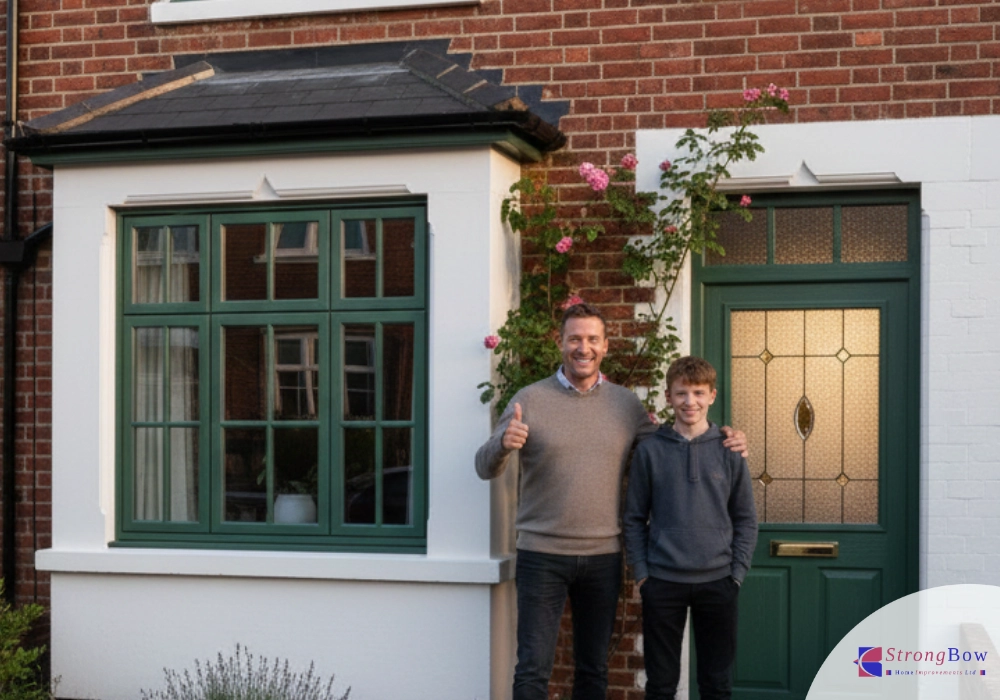
While energy performance is critical, visual impact remains central, particularly in period properties and conservation areas. The good news is that modern heritage uPVC no longer looks like plastic pretending to be timber.
In many cases, it is now difficult to tell the difference without close inspection.
Key heritage features to look for in 2026
Mechanical Joints
Early uPVC windows often used visible 45-degree welded corners. These stand out immediately on period homes. Modern heritage frames use butt-jointed mechanical joints, copying traditional timber joinery.
Flush Sash Technology
A true heritage window sits flush within the outer frame, not proud of it. Flush sash designs replicate the clean lines seen on 19th-century casements and early sash windows.
Deep Bottom Rails
Victorian sash windows often had deeper bottom rails than modern replacements. Quality heritage uPVC systems replicate these proportions, which makes a big difference to overall appearance.
Traditional Hardware
Details matter. Monkey tail and pear drop handles, finished in aged brass, pewter or antique black, help the interior feel consistent with the exterior. These finishes are now widely available as standard.
Councils increasingly focus on these details when assessing planning applications.
3. Maintenance vs heritage reality in a changing UK climate
The UK climate is becoming less forgiving. Wetter winters, stronger winds and hotter summers all take their toll on traditional materials.
For many homeowners, maintenance has become the deciding factor.
Timber vs heritage uPVC in 2026
| Feature | Traditional Timber | 2026 Heritage uPVC |
|---|---|---|
| Maintenance | Sanding and repainting every few years | Occasional wipe with soapy water |
| Durability | Can rot or warp if neglected | UV-stable and weather-resistant |
| Security | Often basic catches | Multi-point shoot-bolt locking |
| Lifetime cost | High over time | Predictable and mid-range |
While timber still has its place in listed buildings, many homeowners now choose heritage uPVC because it offers period looks without ongoing stress.
4. What is the price range for heritage uPVC windows in the UK market?
In the UK market for 2025–2026, heritage uPVC windows typically cost between £700 and £2,200+ per window fully installed, depending on design detail, glazing specification and installation complexity. Simple heritage flush casement windows usually sit at the lower end of the range, while sliding sash designs with mechanical joints and authentic hardware tend to cost more due to their specialist manufacture.
Most homeowners in 2026 buy within the £1,100 to £1,600 range, where windows meet current Part L thermal standards and offer accurate period detailing. While heritage uPVC costs more upfront than standard white uPVC, it remains around 30% to 50% cheaper than timber over both installation and lifetime maintenance, making it one of the most cost-effective long-term options for period properties. Quick cost comparison: heritage uPVC vs timber vs aluminium (UK, 2025–2026)
| Window Type | Typical Installed Cost (per window) | Visual Suitability for Period Homes | Maintenance Over 20 Years | Thermal Performance (2026) | Planning Acceptance |
|---|---|---|---|---|---|
| Heritage uPVC | £700 – £2,200+ | Very high (flush sashes, timber-look foils, mechanical joints) | Very low (clean only) | Excellent (triple glazing standard, ~1.2 W/m²K or better) | High when detailed correctly |
| Traditional Timber | £1,800 – £3,500+ | Excellent (original material) | High (painting every 4–6 years, rot risk) | Good, but glazing-limited | Very high, often preferred |
| Aluminium (Heritage / Slimline) | £1,600 – £2,800+ | Moderate to good (less authentic on Victorian homes) | Very low | Excellent (thermally broken frames) | Variable, less favoured in conservation areas |
Also read: Factory‑Direct Windows vs Retailers
5. Planning permission and conservation areas in 2026
The role of article 4 directions
Article 4 Directions still apply in many conservation areas and restrict permitted development rights. This means you often need planning permission for replacement windows, even if the design matches the original.
However, the approach taken by many councils has evolved.
Sustainability vs preservation
In 2026, many local authorities must balance heritage protection with carbon reduction targets. As a result, high-quality heritage uPVC is often approved where:
- The external appearance closely matches the original
- Mechanical joints and flush profiles are used
- The energy performance improvement is clearly documented
This shift is reflected in local planning guidance and national sustainability policy .
6. Security and smart integration without spoiling the look
Heritage does not mean outdated security.
Modern standards built In
Most quality heritage uPVC systems in 2026 include:
- PAS 24:2022 certification, the UK benchmark for enhanced security
- Multi-point shoot-bolt locking as standard
- Laminated safety glass on doors and vulnerable openings
These features significantly reduce the risk of forced entry while keeping frames visually authentic.
Smart technology, Done discreetly
Smart home integration has matured. Modern heritage windows can now include:
- Internal sensors that alert your phone if a window is left open
- No visible external changes
- Compatibility with common smart home platforms
This is particularly useful in larger homes or rental properties.
Choosing the right installer matters as much as the product
Even the best window system will underperform if it is poorly made or fitted. In 2026, councils and building control officers are paying closer attention to installation quality.
Working with experienced manufacturers and installers reduces risk and delays.
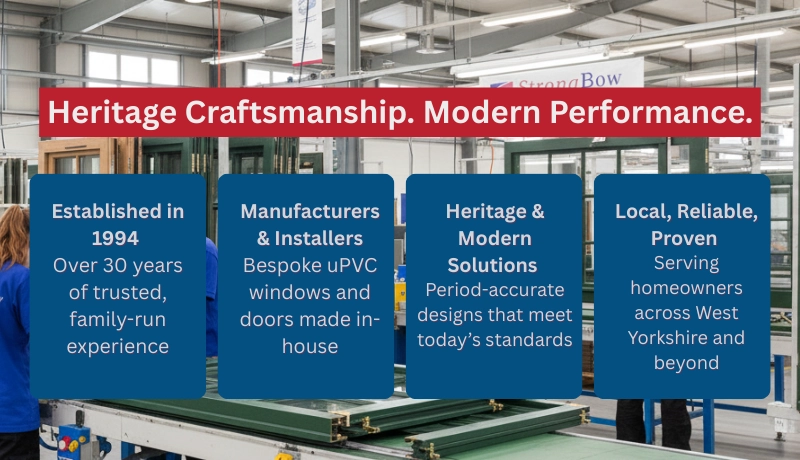
Strongbow Home Improvements Limited, established in 1994, is a trusted, family-run UK manufacturer and installer specialising in best heritage uPVC windows and doors. With full in-house production, carefully detailed heritage designs, and decades of hands-on experience, Strongbow is the kind of specialist homeowners, architects and developers increasingly rely on for regulation-compliant projects in 2026. Their long-standing presence across West Yorkshire and beyond reflects a consistent focus on quality, authenticity and performance rather than short-term trends.
What this means for your 2026 project
If you are planning window or door upgrades in 2026, heritage uPVC is no longer a compromise. It is a practical, regulation-ready solution that aligns with modern energy standards while respecting the character of older buildings.
The key is choosing systems that:
- Meet or exceed Part L requirements
- Use true heritage detailing
- Come with planning support
- Are installed by experienced professionals
Need help with your door and windows, Fill out this form to get a free, no-obligation quote.