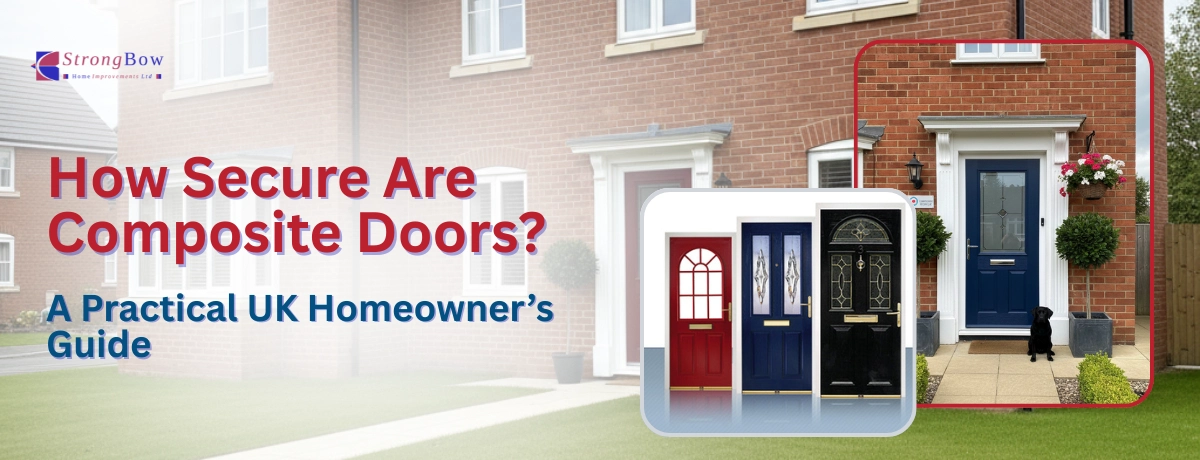
If you’re thinking about upgrading your front door, security is probably at the top of your list. Style matters, of course. Kerb appeal sells houses. But when it comes to protecting your home, the real question is simple: how secure is the door when someone actually tries to force it open?
Composite doors are often marketed as “high-security” by default. Some genuinely are. Others just look the part. This guide cuts through the sales talk and explains, how composite door security really works for UK homes.
Why Front Door Security Still Matters in UK Homes
Most break-ins don’t involve smashed windows or elaborate planning. They start at the front door.
The front entrance remains the most targeted entry point for UK properties, especially during opportunistic daytime burglaries. It’s visible, predictable, and often easier to attack than people realise.
Here’s the problem. Many homeowners assume a door is secure because it looks solid. Thick panel. Heavy handle. Bold colour. But appearance tells you nothing about how a door behaves under pressure.
Common myths still catch people out:
- “It’s heavy, so it must be strong”
- “It’s new, so it’s secure”
- “Composite means burglar-proof”
In reality, composite doors for front entrance security only perform as well as their construction, locking system, cylinder choice, and installation quality combined.
What Actually Makes a Composite Door Secure (Not the Marketing Claims)
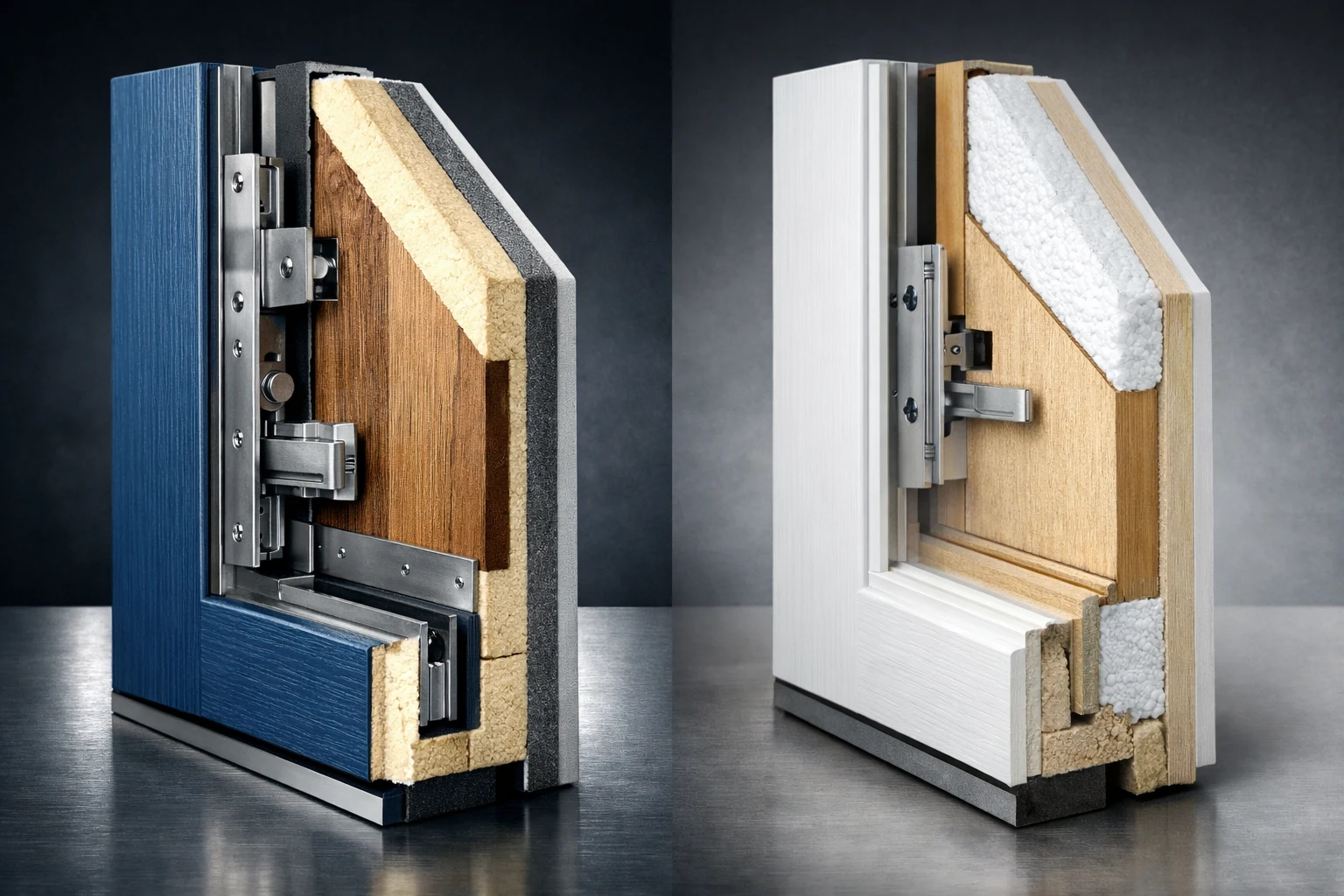
“Composite” simply means made from more than one material. That’s it. There’s no automatic security guarantee attached to the word.
What matters is how those materials are combined.
A properly built composite door uses layered construction to balance rigidity, impact resistance, and long-term stability. Cheaper versions often cut corners by:
- Using low-density foam cores
- Reducing internal reinforcement
- Weakening the frame to save cost
- Relying on locks to do all the work
Security isn’t about thickness alone. A thick door that flexes under force can still fail. The goal is resistance, not bulk.
This section is about the structure only. Locks come later.
3. Core Construction & Impact Resistance
When people talk about solid core composite doors security, they’re usually comparing two core types.
Timber core
- Dense and rigid
- Excellent resistance to kicking and levering
- Holds fixings and hinges well
High-density foam core
- Lighter and more thermally efficient
- Must be reinforced properly to avoid flex
- Security depends heavily on surrounding structure
The outer skins matter just as much. GRP (glass-reinforced plastic) skins don’t crack or split like timber. They spread impact force rather than absorbing it in one weak point.
Weight and rigidity play a big role during forced entry. Doors that flex give burglars leverage. A reinforced composite door frame prevents that flex from transferring into failure.
4. Locking Systems: The Real Security Multiplier
A door slab can be strong, but locks decide whether it stays shut.
A composite door multi point locking system secures the door at several points along the frame. Typically this includes:
- Hooks that grab into the frame
- Deadbolts that shoot straight across
- Compression points that pull the door tight
Single-point locks fail because all the force hits one spot. Multi-point systems distribute force vertically, making prying and kicking far harder.
How many points matter? More isn’t always better. What matters is placement, engagement depth, and frame reinforcement.
When people ask about the best composite door locks UK, the answer isn’t a brand name. It’s the system working as a whole.
5. Cylinder Security: Where Most Doors Fail First
This is where many otherwise solid doors fall apart.
Lock snapping remains the most common attack method in the UK. Burglars target the cylinder, not the door.
Anti snap locks for composite doors are designed to break safely. If attacked, the external section snaps off while the internal mechanism stays locked.
Other attack methods include:
- Drilling
- Bumping
- Picking
Good composite door cylinder security resists all three.
Here’s the key point. Upgrading a cylinder often delivers more security improvement than replacing the entire door. It’s cheaper, faster, and extremely effective when done properly.
6. How Secure Are Composite Doors Compared to uPVC and Timber?
Let’s keep this practical.
When comparing composite doors vs uPVC security, composite doors generally offer greater resistance to sustained force. uPVC doors can perform well when new and properly reinforced, but over time some frames may be more prone to flexing or distortion under prolonged pressure, particularly in older installations.
Timber doors have a different problem. Over time, they move. Shrinkage, swelling, and warping create gaps that weaken locks and frames.
Aluminium often gets labelled “the most secure”, but strength depends on profile design and thermal breaks. Thin aluminium sections can flex just as easily as plastic if poorly engineered.
So, are composite doors more secure than uPVC doors? In real-world conditions, yes. Especially over time.
7. British Security Standards Explained (PAS 24 & Police Approval)
Certifications confuse a lot of homeowners. Let’s simplify them.
PAS 24 composite doors are physically tested. Not guessed. Not assumed. They’re attacked using real tools and real force to simulate burglary attempts.
Secured by Design composite doors go a step further. This police-backed scheme looks at the whole door set, not just the lock.
“Police approved” isn’t marketing fluff. It means the door design reduces known attack methods, not just meets minimum standards.
8. Composite Door Security Ratings: What to Look For (and Ignore)
Composite doors security ratings only matter when they’re specific.
Look for:
- Door set testing, not just lock testing
- Clear British Standard references
- Named cylinder standards like TS007
Ignore vague claims like:
- “High security design”
- “Advanced locking technology”
- “Secure as standard”
If a supplier can’t explain what makes their British Standard composite doors compliant, that’s a red flag.
9. Smart Security & Keyless Entry: Helpful or Overhyped?
Smart tech divides opinion for good reason.
Smart locks for composite doors can improve convenience and access control. They reduce lost key risks and allow timed access.
But they don’t automatically improve forced-entry resistance.
Smart security features for front doors work best when layered onto a mechanically secure door, not used as a replacement for solid locks.
For family homes, keyless entry composite doors can make sense. Just don’t confuse tech with toughness.
10. Anti-Burglary Features Beyond the Door Slab
Security is a system.
Anti burglary composite doors rely on:
- Hinges that resist pin removal
- Glazing cassettes that can’t be popped out
- Reinforced strike plates
Many break-ins happen because doors are badly fitted, not badly designed. That’s why composite doors with anti burglary features UK must be installed properly to work as intended.
11. Installation Quality: The Most Overlooked Security Factor
A PAS 24 door can still fail if it’s installed badly.
Frame fixings, alignment, hinge reinforcement, and sealing all matter. A proper composite door installation UK security setup includes:
- Secure anchoring into structural masonry
- Correct frame tolerances
- Even load distribution across locks
This is where experienced local installers make the difference between theoretical security and real protection.
12. Long-Term Security: Do Composite Doors Stay Secure Over Time?
Security that fades isn’t security.
Composite doors resist warping far better than timber. Locks wear, yes, but they’re replaceable.
Over 10 to 20 years, composite doors maintain alignment, pressure points, and sealing far better than most alternatives. That consistency is what preserves security long-term.
13. Secure Composite Front Door Designs: Does Style Affect Safety?
Design choices don’t have to compromise safety.
Secure composite front door designs can include glazing when done properly. Laminated glass and reinforced cassettes matter more than panel size.
Solid panels offer maximum resistance, but decorative glass doesn’t automatically reduce security.
Colour and finish myths are just that. Dark doors aren’t weaker. Light doors aren’t stronger.
Well-built high security composite doors balance appearance and protection easily.
14. Can You Upgrade an Existing Composite Door’s Security?
Often, yes.
You can:
- Upgrade cylinders
- Replace locking mechanisms
- Reinforce hinges
Upgrade composite door security when the door structure is sound. Replace the door when the slab, frame, or alignment has already failed.
A professional assessment saves money here.
FAQs: Straight Answers to Common Security Questions
Are composite doors secure enough for high-risk areas?
Yes, when correctly specified and installed.
Do insurance companies recognise composite door security?
Yes, especially PAS 24 and Secured by Design doors.
How long do composite door locks last?
Typically 10 to 15 years with normal use.
Are composite doors suitable for flats and apartments?
Yes, provided fire and access regulations are met.
Final Verdict: Are Composite Doors One of the Most Secure Options in the UK?
When built properly, locked correctly, certified to British standards, and installed well, composite doors are among the most secure front door options available to UK homeowners.
They combine strength, stability, durability, and compliance in a way few alternatives manage long-term.
Security isn’t about one feature. It’s about everything working together. And composite doors, done right, do exactly that.
Optional note: If you’re considering a secure composite door installation and want it done properly rather than rushed, working with an experienced local manufacturer-installer like Strong Bow Home Improvements can make all the difference in how that security performs over time.